Summer 2026 Just Dethroned 2013 as the Biggest Domestic Box Office Season Ever
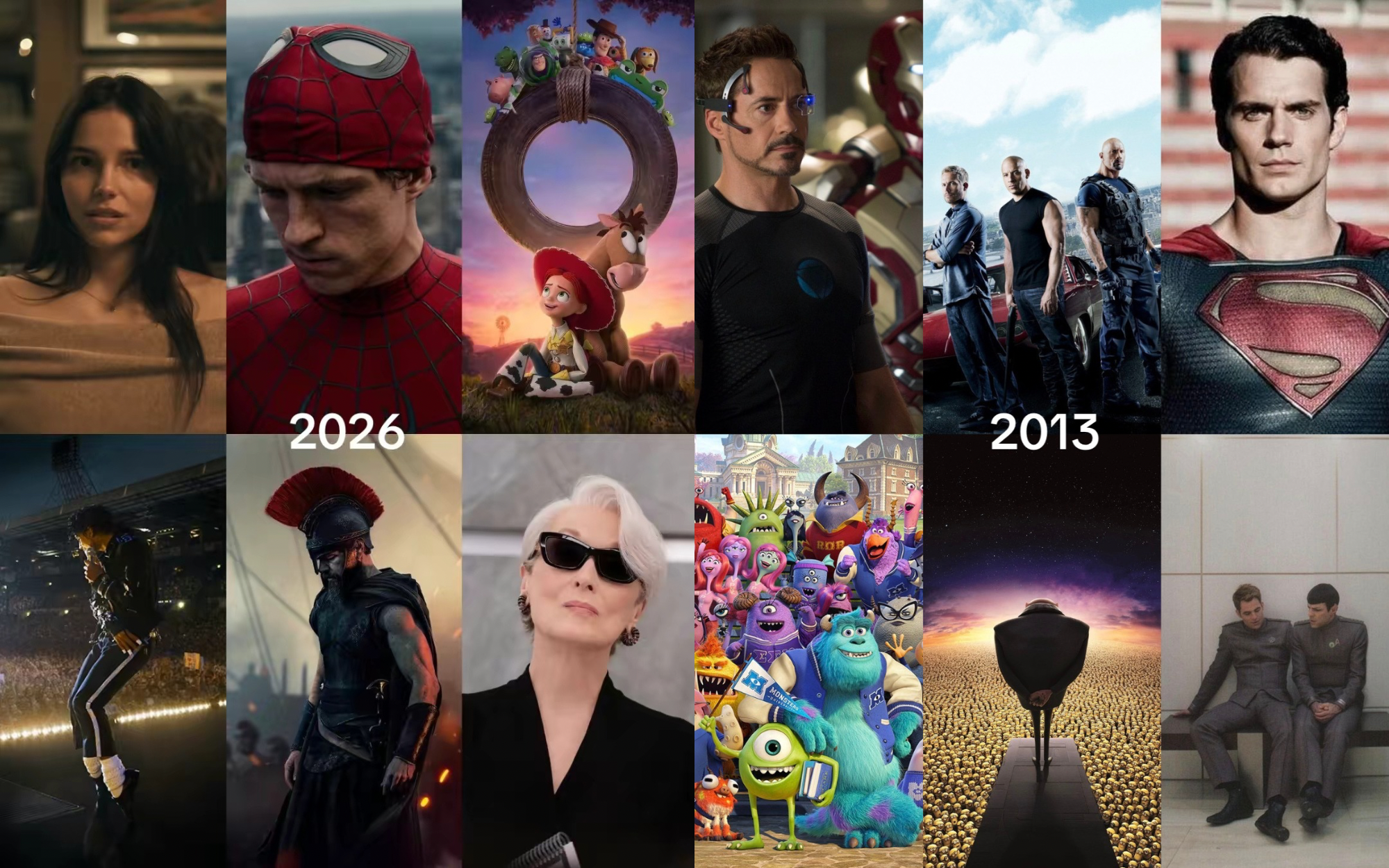
For 13 years, one number sat on the industry’s mantel like a trophy nobody could quite knock off: $4.755 billion. That was the summer of 2013 — Iron Man 3, Despicable Me 2, Man of Steel — the last time Hollywood felt this unstoppable at the North American box office.
Summer 2026 is over. The trophy has a new owner.
According to Rentrak, ticket sales from May 1 through Labor Day (September 7) reached $4.765 billion. That’s roughly $9.3 million more than 2013 — a photo finish after a season almost nobody expected to be this strong.
The movies are back. Not “kind of back.” Record-back.
A season that never cooled off
The most impressive part isn’t the headline total. It’s the consistency.
For the first time in domestic box office history, every core summer month crossed $1 billion:
May: $1.07 billion
June: $1.08 billion
July: $1.18 billion
August: $1.276 billion (an all-time record for the month)
August used to be the slump after the July fireworks. This year it was the peak.
Admissions landed around 322 million, a clear jump from last summer’s 275 million. People didn’t just show up for one event movie and vanish. They kept coming back.
The movies that carried it
Two titles did the heavy lifting. One of them did something close to the impossible.
Spider-Man: Brand New Day (Sony) finished the summer with about $923 million domestically. That’s the highest-grossing summer release in more than a decade. Well ahead of Top Gun: Maverick’s $701 million from 2022. It spent six straight weeks at No. 1, raced past $1 billion worldwide in six days, and is now circling the all-time domestic record still held by Star Wars: The Force Awakens.
Then came Nolan.
The Odyssey (Universal) added about $589 million in North America and more than $1.6 billion worldwide. IMAX 70mm tickets sold out a year in advance. It wasn’t just a hit. It was an event people planned their summer around.
The rest of the top 10 filled in the gaps instead of leaving dead weekends:
Spider-Man: Brand New Day — $923M
The Odyssey — $589M
Toy Story 5 — $480M
Obsession — $263M
Michael — $243M
The Devil Wears Prada 2 — $221M
Backrooms — $198M
Minions & Monsters — $183M
Star Wars: Mandalorian & Grogu — $178M
Moana — $126M
That’s a mix of tentpoles, a Pixar sequel, a prestige epic, a cheap original horror smash, and mid-budget adult fare. The slate wasn’t just big. It was broad.
Universal won the studio race with $1.23 billion for the summer. Sony’s Spider-Man haul pushed it to about $1 billion. Disney held at $1.03 billion.
The asterisks
Two caveats matter if you want to be honest about the record:
These numbers are not inflation-adjusted. A 2013 dollar bought more movie than a 2026 dollar. In real terms, 2013 still likely sold more tickets.
The calendar helped. Summer 2026 ran 130 days. Summer 2013 ran 123. Labor Day’s placement gave 2026 an extra week.
Even with those footnotes, the story holds. This was only the second post-pandemic summer to clear $4 billion. The first was 2023’s Barbenheimer season at $4.09 billion. 2019, the last “normal” pre-COVID summer, did $4.3 billion. 2026 didn’t just recover. It passed the old raw-dollar high-water mark.
What it actually means
For years the question was whether theatrical moviegoing had a ceiling now that streaming exists. Summer 2026 didn’t answer every structural problem: ticket prices are high, mid-budget originals still struggle unless they catch fire, and some franchises still flopped.
But it answered the one that mattered this year: if you give people movies they actually want to see in a theater, they will still go.
Spider-Man reminded everyone that event superhero cinema isn’t dead when the character still means something. Nolan proved audiences will still treat a three-hour IMAX epic like a pilgrimage. Obsession and Backrooms proved that original, relatively cheap films can still print money if they hit a cultural nerve. Toy Story 5 proved families never really left; they were just waiting.
Hollywood spent half a decade wondering if the summer blockbuster season was a relic. Then it posted the biggest summer in domestic history (by a sliver, with caveats, and with a lot of help from two movies).
A sliver is still a record.
And after 13 years, $4.765 billion is the new number everyone else has to beat.